Great Grad: Meet Nico Julia, Geography, Political Science and Spanish Major

Each year, to celebrate commencement, Cal Poly highlights a group of “Great Grads”: A student from each of the six colleges and the Cal Poly Maritime Academy who are completing an outstanding academic journey and moving on to the next phase of their lives. Nico Julia is our Great Grad from the College of Liberal Arts.
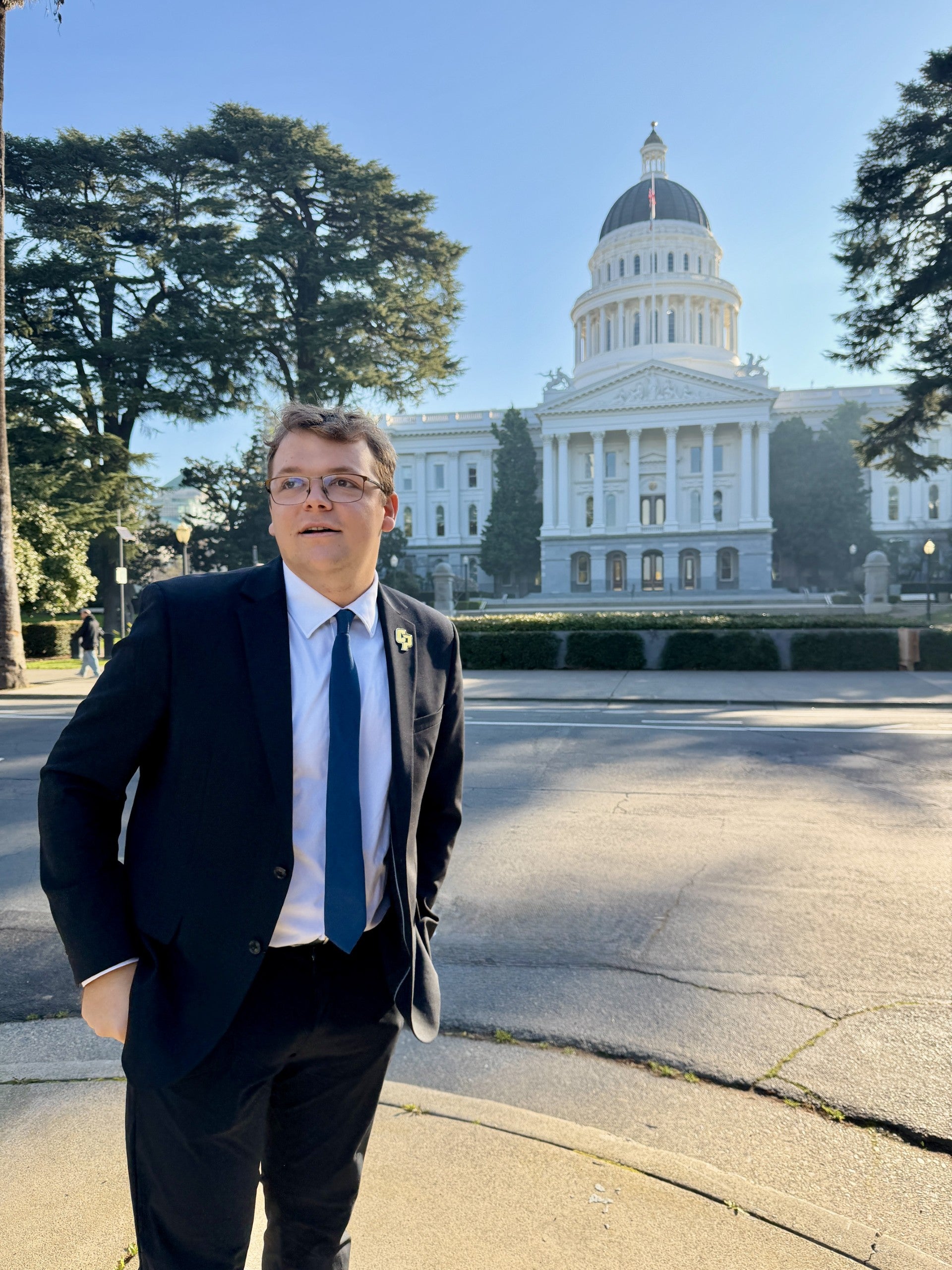
Nico Julia is graduating with degrees in political science, anthropology and geography, and Spanish (as well as four minors) in pursuit of a foreign service career. His secret to understanding the world may surprise many.
“A lot of people do not branch out beyond their field of study, but I think doing so is one of the best ways to diversify your thinking and bring new ideas into your own work,” the 21-year-old said. “What ties everything together for me, though, is my love of geography. It has always been and will always be my main framework for understanding and approaching the world.
“People are often confused when they hear about the range of subjects I study, from languages to computer science to statistics to biology — but the truth is that all of those feed into and deepen my geographical knowledge.”
His interest started early, looking at maps as a kid and imagining what it would be like to live in far away and different places.
“Over time it grew into a framework for developing real global fluency, which requires a strong geographical foundation,” he said. “The problems I care most about, whether in global conflicts, environmental science or agriculture, can both be explained and solved through a thorough understanding of geography.”
This fall, he’ll begin at Georgetown University’s Edmund A. Walsh School of Foreign Service, where he has received a scholarship to pursue a master’s in foreign service.
“I want to be a diplomat, specifically working in environmental diplomacy and global environmental affairs,” said the Palo Alto, California, resident. “Over time, I want to work my way up to a position of real influence in that space, whether that means becoming an ambassador or, who knows, maybe secretary of state one day.”
He said Cal Poly has prepared him for what comes next.
“The sheer volume of experience students accumulate here makes us very attractive to employers — and I think employers know this, which is part of why there is practically a career fair on campus every week,” he said. “Several of my courses have also included simulations — mock job interviews and negotiation exercises — which fit squarely into the Learn by Doing philosophy and do a lot to make students ready to hit the ground running from Day One.”
His extracurricular activities rounded out his education. As Associated Students Inc.’s secretary of clubs and organizations since May of 2024, he helped increase funding for the campus’s 400 clubs, streamlining processes that have frustrated some in the past. It was a pivotal role.
“It is probably where I affected the most people during my four years here,” he said, “and it also taught me a lot about how to actually move projects and policy forward inside a large institution, which is directly relevant to the work I want to do in the future.”
He was captain of the Spanish Debate Team, which enjoyed success at regional and international competitions, representing Cal Poly at Spanish Debate World Championships last year in the Dominican Republic. “Debate has helped me a lot for my post-university life,” he said, “because to be an effective diplomat it is important to be able to speak and debate in another language.”
Two extended internships involved data collection (utlizing drone and satellite imagery) and filtering the information to create machine-learning algorithms to automatically detect agroforestry in Brazil or eelgrass closer to campus.
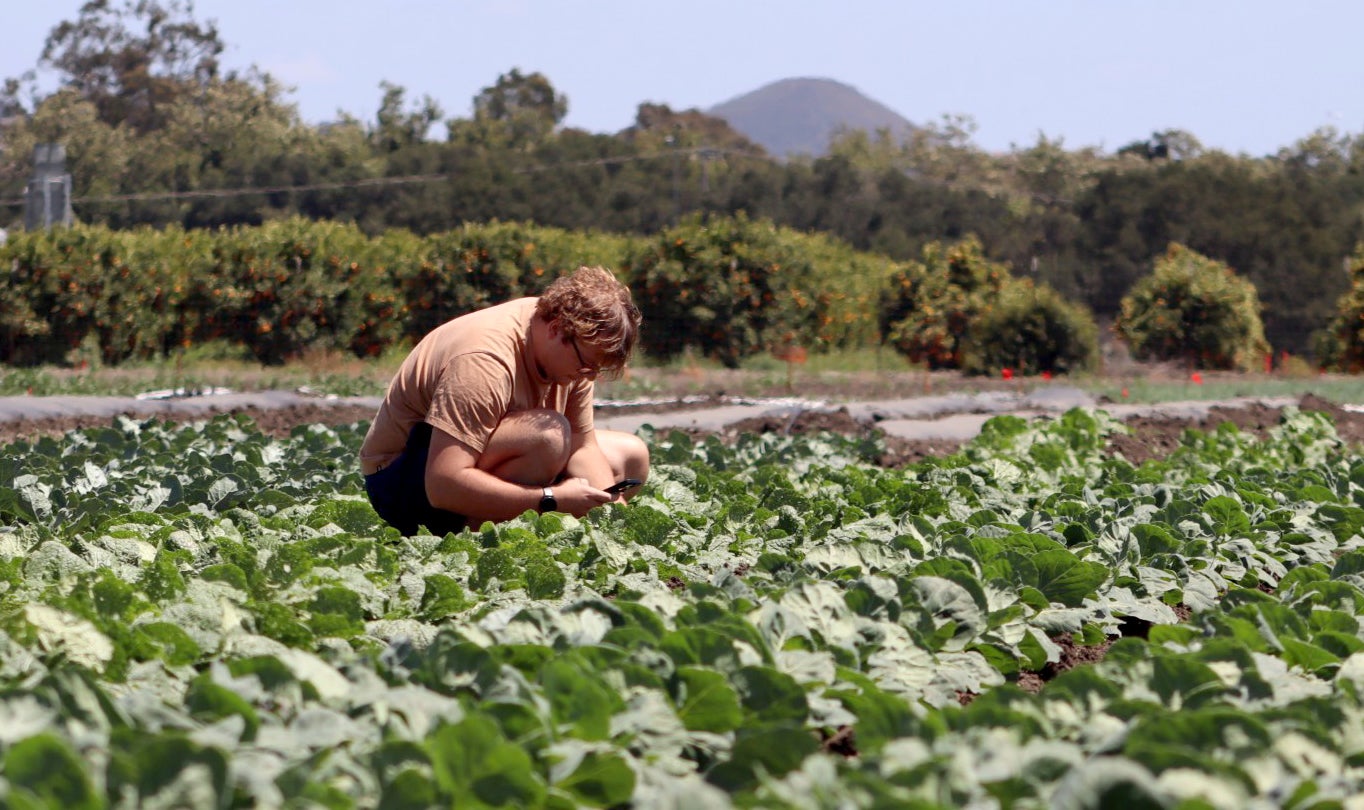
He’s also been involved since 2024 with Morro Bay National Estuary Program’s ongoing efforts with Cal Poly to better understand and restore the harbor’s eelgrass habitat that saw a massive die-off. Since 2017, eelgrass acreage has rebounded from 13 acres to 750. To verify drone maps, he made onsite visits, called “ground-truthing,” to distinguish whether the vegetation pictured on the maps is eelgrass, green algae or “wrack,” piles of dead seagrasses.
He also served as a lab assistant in a joint India-U.S. project to analyze satellite data to determine forest health and deforestation in Pará, a northern Brazilian state, from NISAR, the NASA-India Synthetic Aperture Radar satellite launched last July from India.
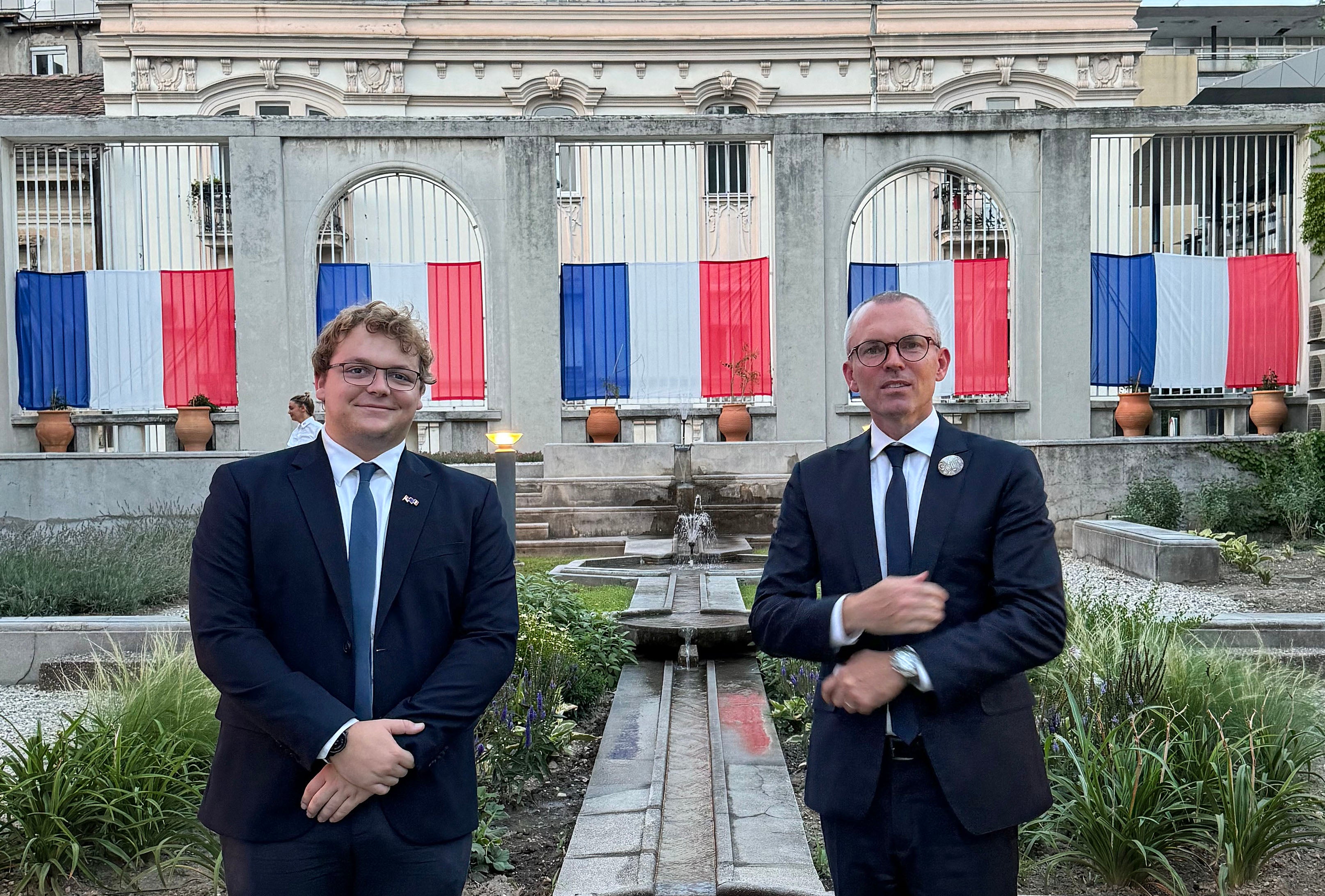
Even more substantial was an internship in Serbia that Julia fought for via emails with François-Xavier Kowandy, the scientific and university attaché for the French Embassy in the capital city, Belgrade. Julia, who grew up in Paris, spent the summer of 2024 working abroad on several projects for Kowandy after convincing him he could build the website the the attache needed for a project. That task took a fortnight, and Julia spent the rest of the summer on a range of assignments, including promoting a sustainability contest and networking with international scientists and researchers on behalf of the French government.
“I got the opportunity to do a lot of hands-on work and promote collaboration and friendship through diplomacy,” he said. “This experience was very important to me, and in the future I am interested in continuing to work in the realm of collaboration between nations through promotion of science and beyond.”
Julia credits his mother’s intellectual influence, observing that “I was lucky to grow up surrounded by interesting, driven people and ideas.” When he was older and his motivation expanded beyond impressing his parents, he found he had “a deep desire to be able to impact people who are struggling” due to global environmental challenges.
Cal Poly was his top choice for a university to help him pursue that goal. It was, he said, flexible enough to let him pursue multiple interests at the same time and met his need to obtain a pragmatic, hands-on approach to education.
He found inspiration through geography professor Andrew Fricker’s approach in the classroom.
“What I admire most about him is that he teaches you how to think and solve problems rather than teaching passively,” Julia said. “He does this in class and by making students pursue real projects with real implications with companies or entities outside the classroom.”
Cal Poly made it easy to become involved in the campus community while Learn by Doing gave him the opportunity to apply his learned lessons.
“The classes themselves are only half of the learning I have done here,” he said. “A lot of it comes from the other opportunities the school has given me access to. I never expected to be writing research papers, doing serious work alongside major American institutions, and contributing to campus projects that will have a lasting impact on the student body, but Cal Poly gave me enough room to do all of those things.”
Want more Learn by Doing stories in your life? Sign up for our monthly newsletter, the Cal Poly News Recap!


