
Great Grad: Meet Marc Cabeliza, Bioresource and Agricultural Engineering Major

Each year, to celebrate commencement, Cal Poly highlights a group of “Great Grads”: A student from each of the six colleges and the Cal Poly Maritime Academy who are completing an outstanding academic journey and moving on to the next phase of their lives. Marc Cabeliza is our Great Grad from the College of Agriculture, Food and Environmental Sciences.
On Marc Cabeliza’s life-skills map, the agricultural engineering student’s first stop will be the intersection of Civil Engineering and Environmental Policy.
He’s already lined it up: “I will be an executive fellow for the California Department of Food and Agriculture for the upcoming year,” he said of the state program designed to inspire and train the next generation of Golden State public leaders. He’ll join the other 17 state fellows accepted when the annual program begins in September.
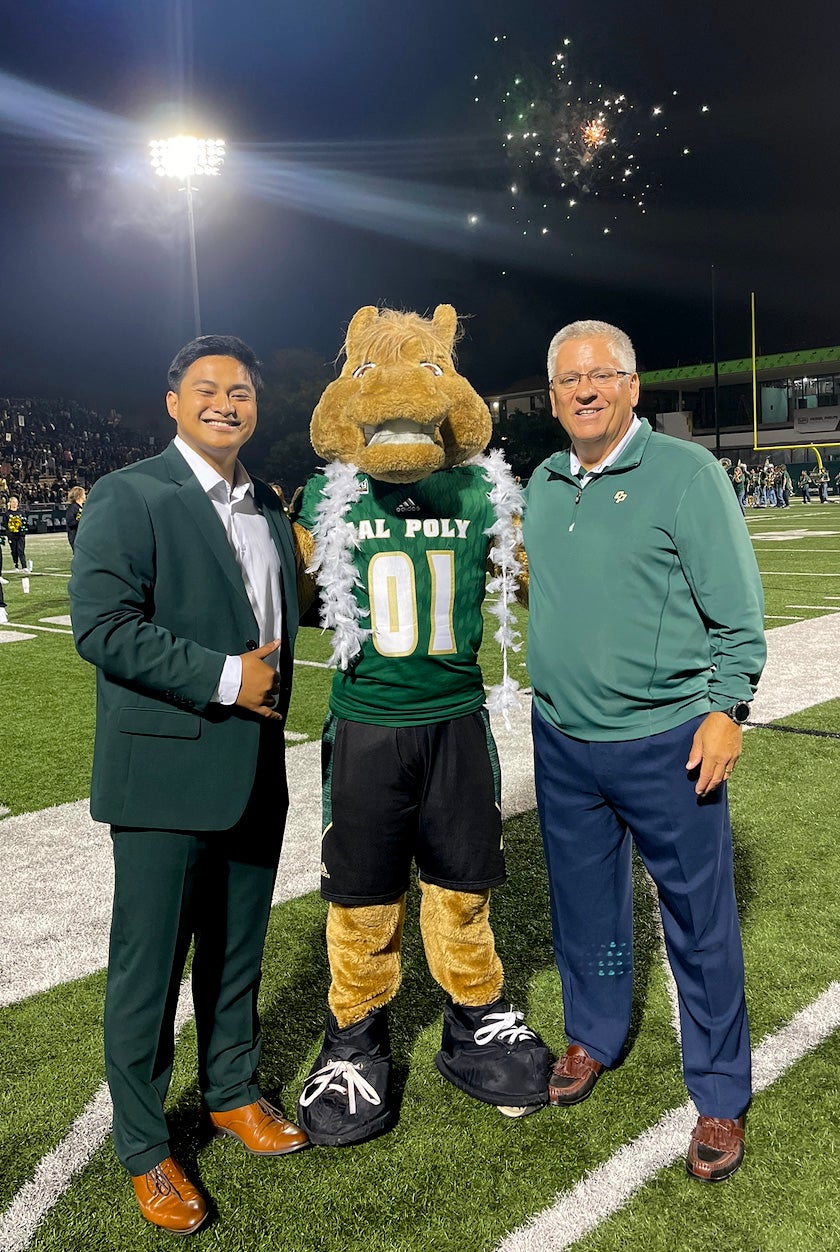
Cabeliza will begin his career working with seasoned mentors to help him develop the skill sets and leadership capacity needed to drive policy change. The department he’ll assist safeguards the state’s food system and promotes a fair marketplace for it, while promoting a California-grown food supply internationally recognized for quality, sustainability and growers’ ability to innovate.
Those characteristics are not unlike the ones achieved by Cabeliza, who moved to Santa Maria, California, with his family when he was 9.
State leadership is nothing new for him. He made history five years ago as the first Pioneer Valley High School student to be selected president of the California FFA Association and took a gap year crisscrossing the Golden State before starting at Cal Poly in 2022.
“When I traveled around the state, many alums from Cal Poly told me how great of a school it was.” he said. “I wanted to come into a school and actively participate in my major — bioresource and agricultural engineering, or BRAE — from Day One, and Cal Poly was able to provide that for me.
“Learn by Doing is the reason I am the person I am today. I got hands-on experience in engineering through my labs, professors and projects, such as building an autonomous
lettuce harvester in the BRAE Department and working at Cal Poly’s Irrigation Training and Research Center. Because of these opportunities, I was able to land internships since my Learn by Doing experiences set me apart.”
Cabeliza’s extracurriculars with ASI student government over his last three years started with his election as a representative of the College of Agriculture, Food and Environmental Sciences. He moved up the ladder until, for his senior year, he was elected to lead the student body. These high-profile efforts capitalized on the leadership skills he developed as an FFA student leader, representing 98,000 of his peers between Crescent City and San Diego.
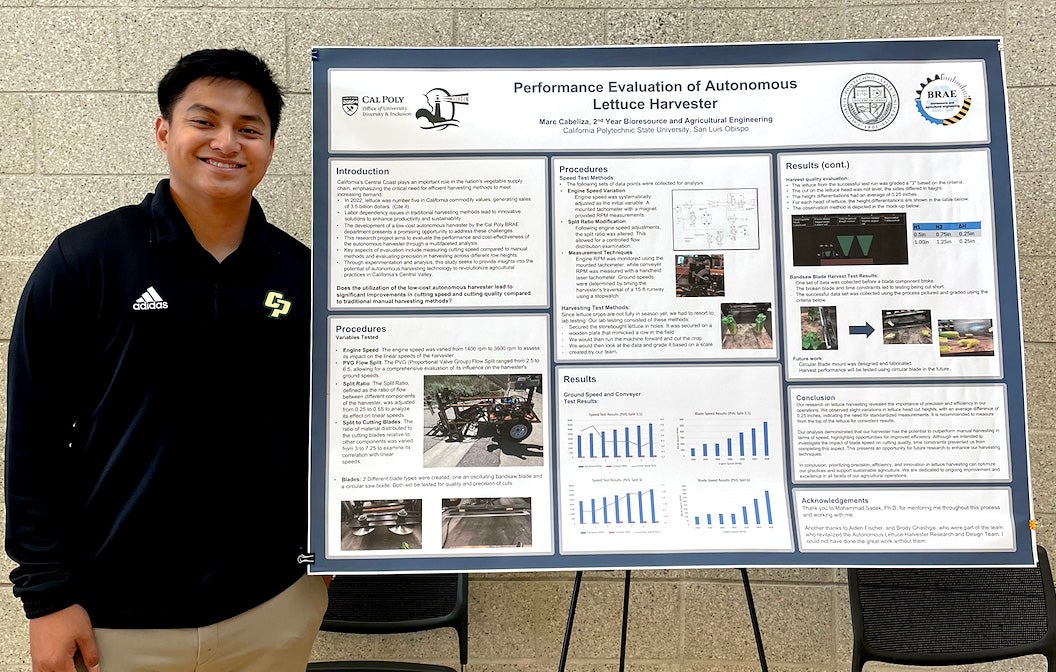
“I first decided to pursue public service back in high school,” he said. “I saw the cool opportunities that my sister was a part of, so I decided to follow her footsteps. Once I was in the FFA program and other programs in high school, I realized the difference I could make in the communities I am a part of. It wasn’t something that came easy. I made a lot of mistakes, and I was always scared of public speaking — but time and time again, people supported me and believed in me, and I couldn’t do what I did without them.”
In his first two years with ASI, he increased club and organization funding by $10,000. As chair of the University Union Advisory Board, he worked to increase study spaces by allowing the facility in the heart of the campus to remain open as a study hub around the clock.
After winning the 2025 election for student body president, he stepped into office representing more than 22,000 classmates in six colleges, advocating for solutions to campus issues at the local, state and federal levels, and serving as the CEO of the nonprofit ASI Inc., with its annual operating budget of over $18 million, primarily from quarterly student enrollment fees.
Highlights of the year as president included: establishing a twice-weekly free grocery shuttle that began in January for students living on campus and battling food insecurity; a community-centered event celebrating identity, culture and belonging; a weeklong mental health awareness campaign; and a successful voter registration drive that resulted in about 450 new voters to participate in the June 2 California Primary — the highest number among California’s two public university systems.
“Representing Cal Poly students has helped me to share my future, because it has allowed me to connect with so many students and understand how policies and systems can make a great impact,” the 23-year-old said. “This mindset is something I carry in everything that I do — my classes, labs and works — and it’s pushed me to think outside the box and look at everything holistically.”
Cabeliza said he was also inspired by friends in student government and classmates.
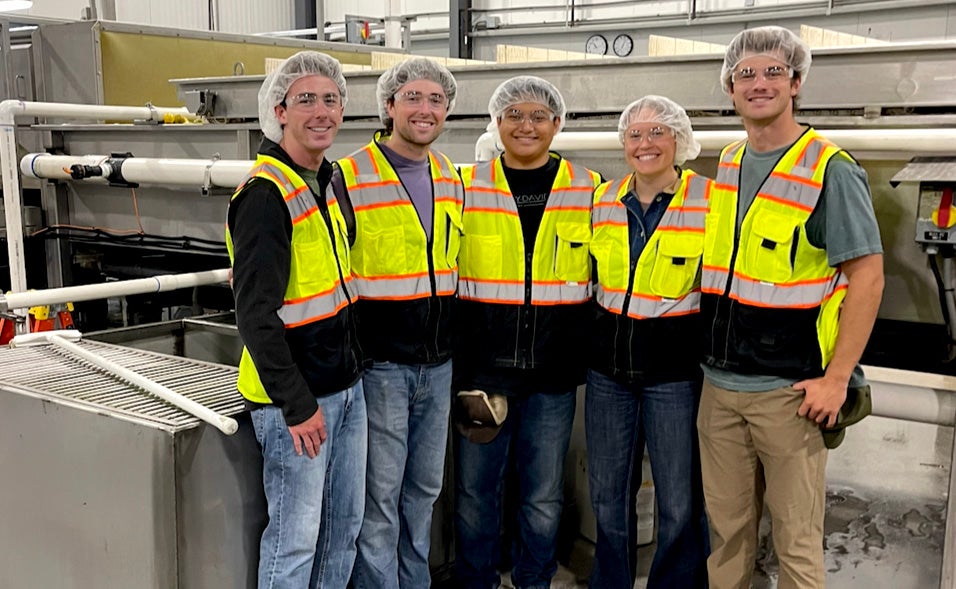
“Some of my closest friends are in majors that I had no idea existed or are going into industries that I never thought about,” he said. “Seeing the work they put in and the opportunities they took advantage of pushed me to do the same.”
As he readies for graduation, he remains grateful for the opportunities at Cal Poly. Moreover, he’ll leave with no student debt thanks to financial aid and university scholarships funded by supporters and alumni who established legacy grants to spread Learn by Doing to future Mustangs.
“This college has also connected me with a community and a network of alumni that allowed me to land internships and jobs all throughout my time here,” Cabeliza said.
One of his final acts will be to speak to each member of the Class of 2026 on the commencement stage in Alex G. Spanos Stadium during six ceremonies June 13-14
“When I first came to campus, I was unsure of myself and didn’t fully know where I belonged,” Cabeliza said. “I was trying to navigate everything on my own and was nervous to step outside of my comfort zone. Now, I’m much more confident in who I am and the impact I want to make. I’ve learned how to lead, advocate for others and take advantage of opportunities even when they feel scary.
“If I could give advice to my younger self, and to future students, it would be: ‘Don’t be afraid to put yourself out there. Get involved early, ask questions and take risks. You don’t have to have everything figured out right away, but every experience will help you grow.’ ”
Want more Learn by Doing stories in your life? Sign up for our monthly newsletter, the Cal Poly News Recap!


