Great Grad: Meet John O’Donnell, Aeronautical Engineering Major

Each year, to celebrate commencement, Cal Poly highlights a group of “Great Grads”: A student from each of the six colleges and the Cal Poly Maritime Academy who are completing an outstanding academic journey and moving on to the next phase of their lives. John O’Donnell is our Great Grad from the College of Engineering.
John O’Donnell jump-started his aerospace career with a car.
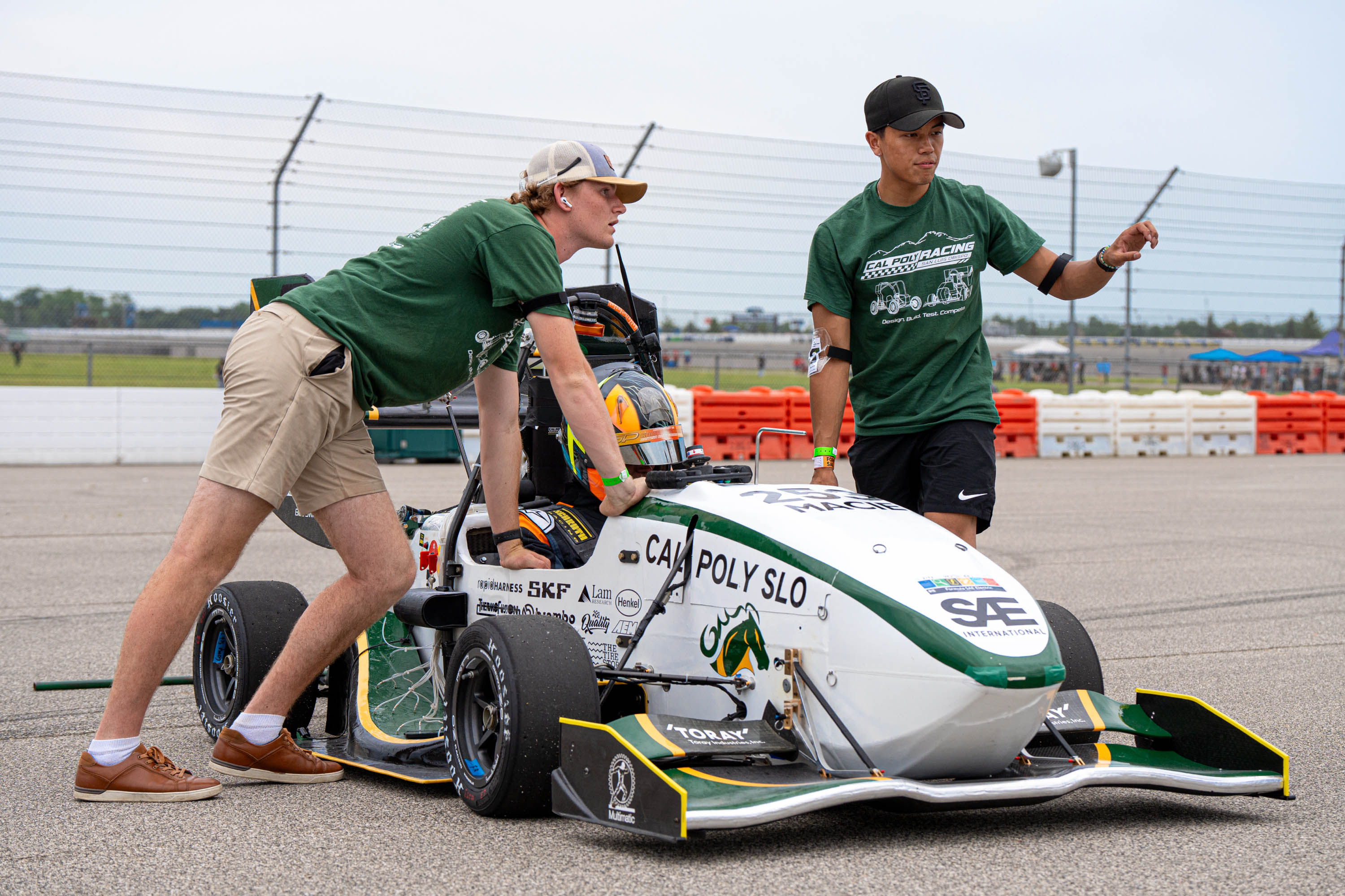
Well, actually race cars, as team lead for Cal Poly Racing. The club’s 100 students are an SAE, or Society of Automotive Engineers, Collegiate Design Series team who design, manufacture and test two innovative race vehicles — an off-road “Baja” racer and a Formula or F-style car.
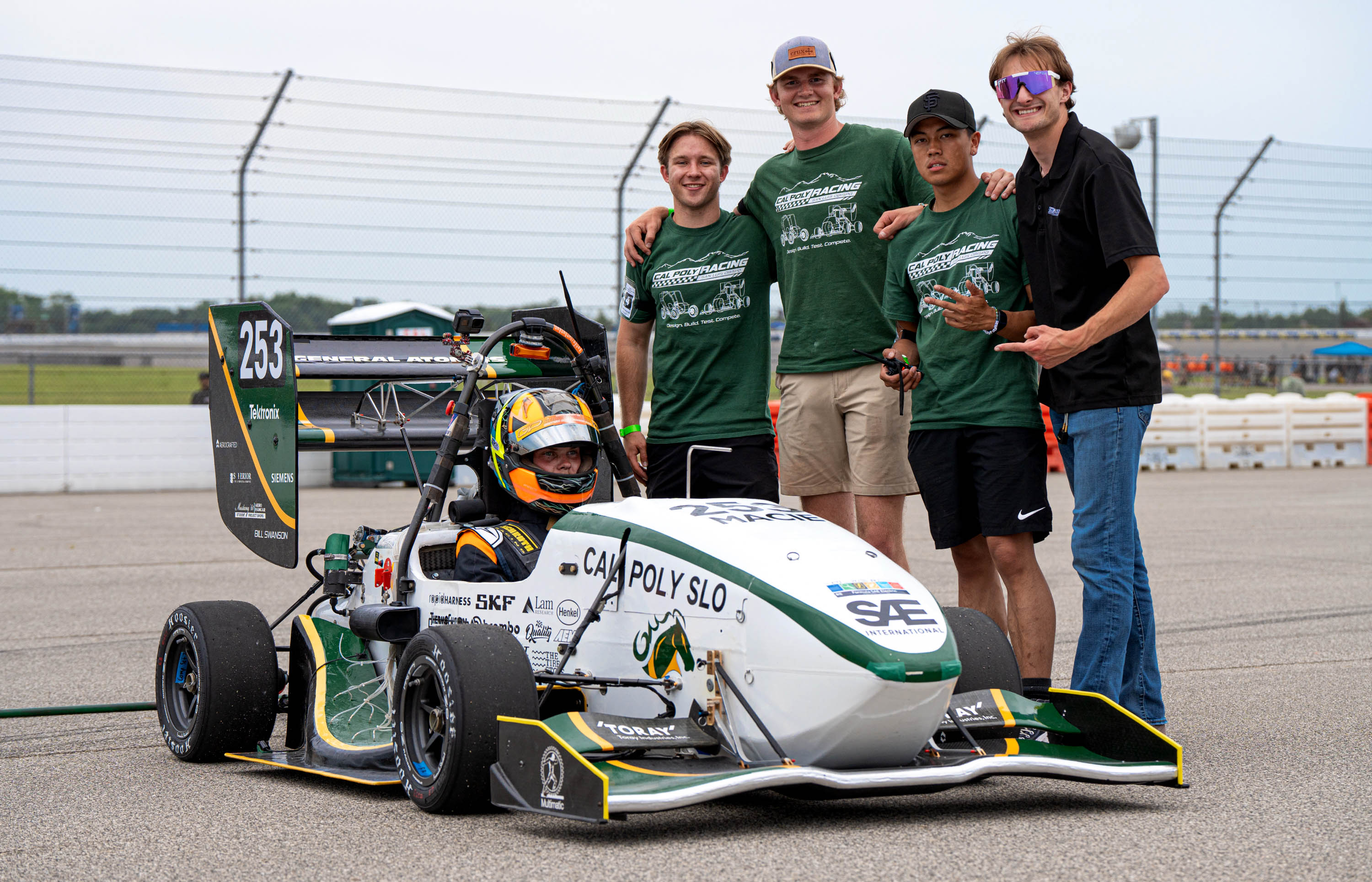
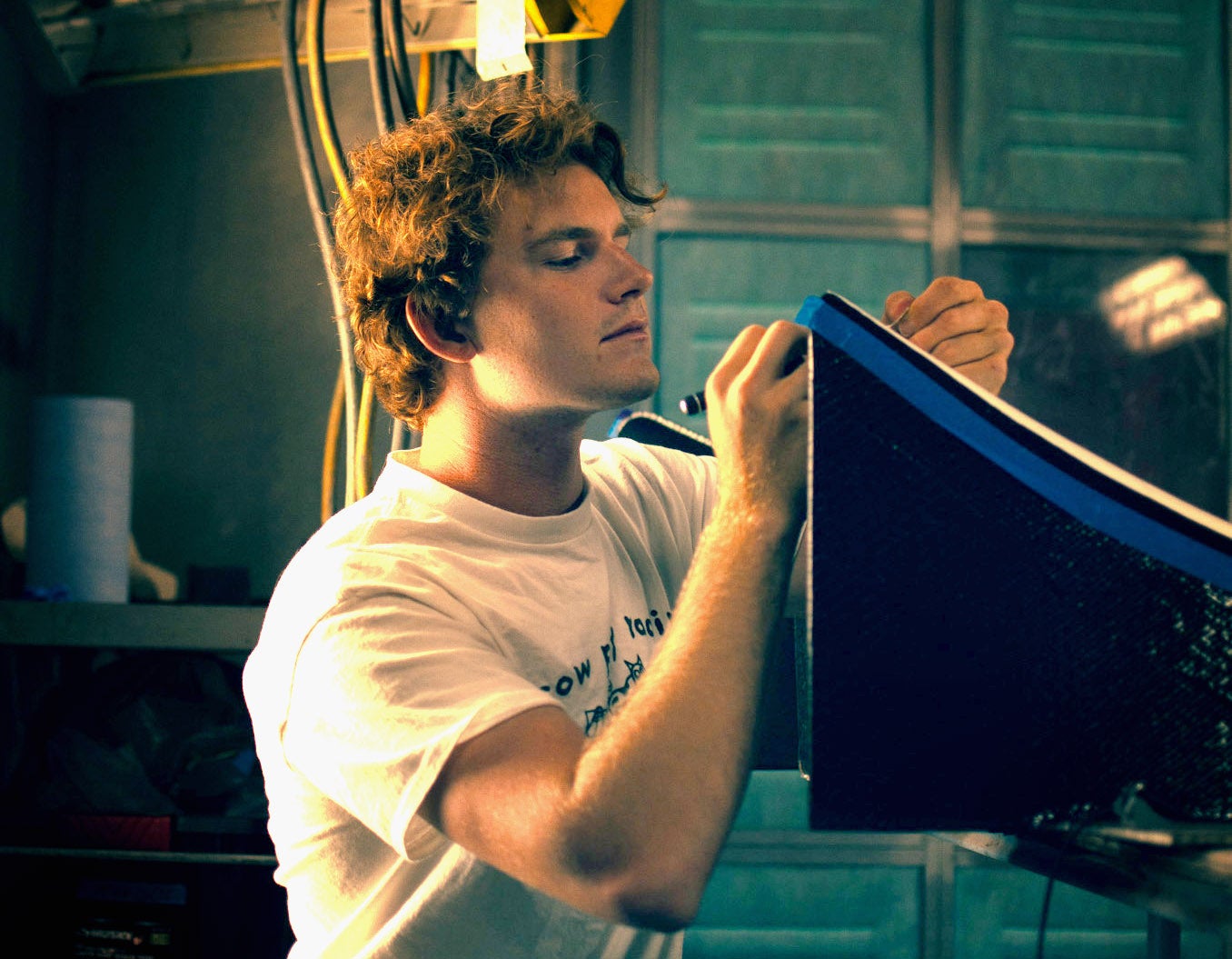
O’Donnell and teammates spent countless hours each year in the Aero Hanger machine shop working on these vehicles that compete across the U.S. — challenging individual members to apply their knowledge outside of class while developing the teamwork and technical skills needed to succeed on the racetrack.
Cal Poly FSAE “feels like a second family to me,” he said. “The long nights in the shop, the shared victories and setbacks, and the relentless drive to improve have created a bond that feels more like a family.”
The team promises prospective members: A place to “put theory into practice and develop project management, communication, leadership and professionalism skills.” And just a single caveat: No experience necessary.
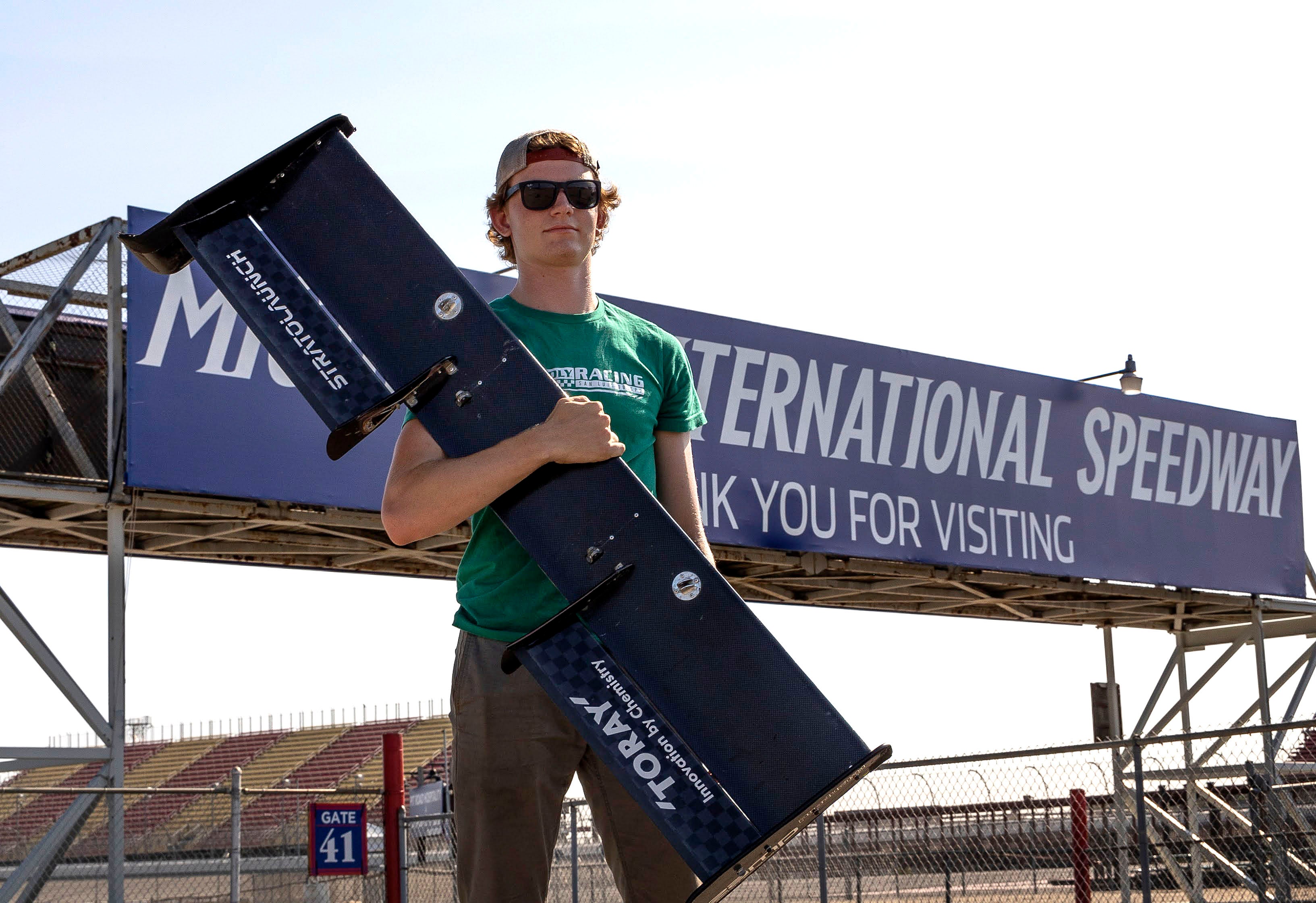
As a freshman in 2022, O’Donnell, who initially considered rocketry, joined the aerodynamics subsystem and 14 months later advanced to be its leader. In June of 2024 he took over as the overall team lead of the Formula car.
“Cal Poly Racing was my real-world laboratory,” the 22-year-old said. “In the classroom, you often deal with abstract theories, but in Formula SAE, those theories have to survive a racetrack. It allowed me to see the entire lifecycle of a part, from the first CAD sketch to the final validation.
“More importantly, it taught me the language of production. Being able to walk into a classroom and see a lecture confirm a phenomenon I’d already witnessed in the shops is what made my education feel three-dimensional. It turned me into an engineer who understands that a design is only as good as its ability to be built.”
The overall team built two Formula cars in the 2023-24 school year: the final year for the combustion-engine vehicle nicknamed “Leftie,” representing the club’s 30-year heritage, and an electric, affectionately known as “Lucie,” which was the group’s future.
The following school year was a strategic pivot for the program: moving exclusively to electric from fuel-powered vehicles.
“This wasn’t just a technical shift; it was a leadership challenge,” the Seattle resident said. “I helped establish an advisory board to ensure the program’s long-term stability and worked to secure resources, such as the next generation of integrated hub motors,” where electric motors are built directly into each wheel hub.
“This was pivotal because it taught me how to manage a large-scale transition, balance future team interests and prioritize quality over quantity — skills that are directly applicable to my future work in the aerospace industry. It proved that I could not only help produce a vehicle but also build the organizational infrastructure needed for a team to succeed long after I graduate.”
O’Donnell began planning his post-high school education as a Western Aerospace Scholar, a program through Seattle’s Museum of Flight that’s specifically designed for high school students interested in STEM, science, technology, engineering and math, through the exploration of flight, aerospace design and space travel that is the mission of the world’s largest private air and space museum.
He had a specific list of attributes for his college, too: a “powerhouse aerospace program”; a reputation that resonated with industry; and a landscape “that supported his life outside the lab — including golfing, hiking and skiing.
“It was the one place where I could see myself not just surviving a difficult curriculum but truly being happy while doing it,” he said. “It was the right balance of challenge and lifestyle.”
Cal Poly’s Learn by Doing ethos was the bridge between being a student and becoming an engineer.
“It’s one thing to calculate the shear strength of a bolt in a textbook, but it’s an entirely different experience to be the one actually machining the part and feeling how the material reacts,” O’Donnell said. “This philosophy shifted my studies from memorization to
application; I stopped asking ‘Will this be on the test?’ and started asking ‘How will this hold up on the vehicle?’ ”
One class — Aerospace Flight Test — was a departure and at the same time similar to the experiences he had with the race team. Aero 409, taught by aerospace engineering Professor Paulo Iscold, offered a real view into how flight tests unfold: part classroom, part control room, part cockpit — with students rotating through every role in testing an aircraft to understand its limits.
During one test, O’Donnell and his classmates sat shoulder to shoulder in headsets, eyes moving between live pilots, cockpit video and a map tracking the experimental RV-7 aircraft as it turned offshore.
He recognized the cadence. The systems used in the class were more sophisticated than what his team used on race car testing, he said: “It’s similar to what we do for testing. There’s a lot of overlap.”
With work inside and outside of the classroom, O’Donnell is ready to start his career as a liaison engineer on the 777 program at the Boeing Co.’s Everett Production Facility, reportedly the largest manufacturing building in the world that also produces 747, 767 and 787 airliners. The Triple Seven is the largest passenger plane designed to fly on just two engines.
He’ll be on the factory floor, just where he wants to be, working to resolve technical and non-conformance issues immediately. Cal Poly “shaped my future goals by showing me that I’m most effective when I’m close to the hardware,” he said. “It’s the reason I pursued a role at Boeing. I realized that I don’t want to just sit behind a screen; I want to be on the floor, applying fundamental engineering to real-world production challenges.”
As he looks to the future, he can’t forget the past four years. Cal Poly was more than just a university, he said; it’s a culture of doers.
“I’m leaving with a degree, but more importantly, I’m leaving with a community of friends and mentors who pushed me to be better,” O’Donnell said. “It’s bittersweet to head back to Seattle, but I know that the Learn by Doing mindset is something I’ll carry with me into the Everett factory and throughout the rest of my career. Go Mustangs!”
Want more Learn by Doing stories in your life? Sign up for our monthly newsletter, the Cal Poly News Recap!


