
Cal Poly Students Help Connect Emergency Radio Network Across 3 Counties

Cal Poly students and amateur radio volunteers have reached a major milestone in regional emergency communications, linking Monterey, San Luis Obispo and Santa Barbara counties through radio links that do not rely on commercial internet service.
The connection, completed Oct. 3, expands the Amateur Radio Emergency Data Network (AREDN), which uses radio equipment installed on hills and mountaintops to transmit email and voice calls between connected locations.
With adequate backup power, the network could allow emergency volunteers to exchange critical information when wildfires, earthquakes or other disasters disrupt conventional communications infrastructure.
“We are capable of operating emergency communications when everything else fails,” said AJ Gregory, an electrical engineering graduate student who served as president of the Cal Poly Amateur Radio Club during much of the expansion.
Licensed amateur radio operators could use compatible equipment to connect to the network and exchange email and voice calls during an emergency. The Cal Poly Amateur Radio Club already participates in county emergency communications exercises and is testing check-ins through AREDN’s Meshphone system.
The achievement represents years of collaboration among students, alumni and amateur radio operators throughout the region. In May 2025, the club secured a $77,000 grant from Amateur Radio Digital Communications to modernize aging equipment and expand the existing network.
Although installations were already underway, the pace accelerated when the grant funding became available in early 2026.
All 13 main radio sites involved in the project have received improvements, either through equipment purchased with grant funding or upgrades carried out by students and local amateur radio volunteers, according to Akshay Sathish, a fourth-year computer engineering student and the club’s current president.
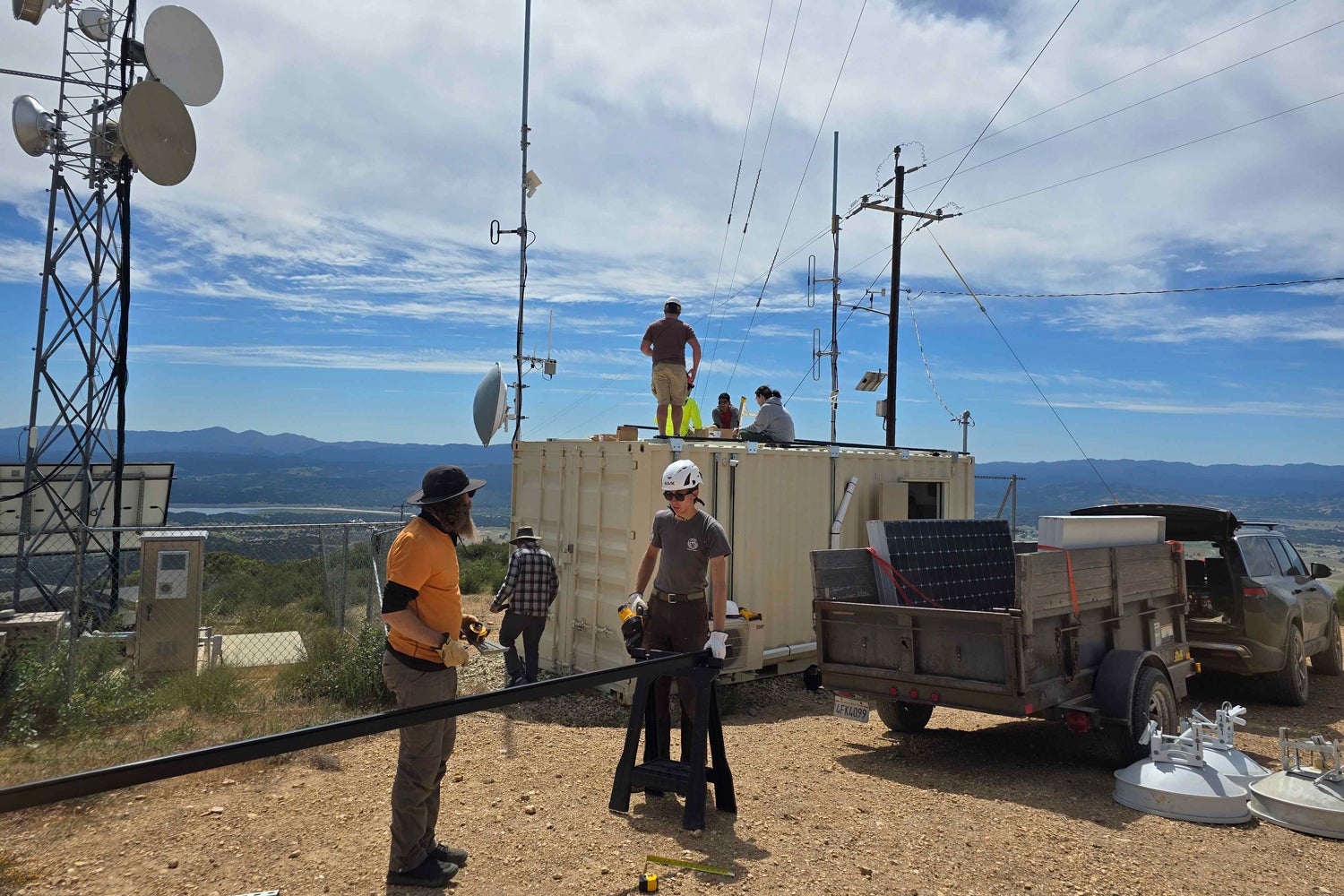
Reaching those sites presented significant logistical challenges. Many are on privately owned land, requiring students and volunteers to coordinate access before transporting equipment to the remote locations.
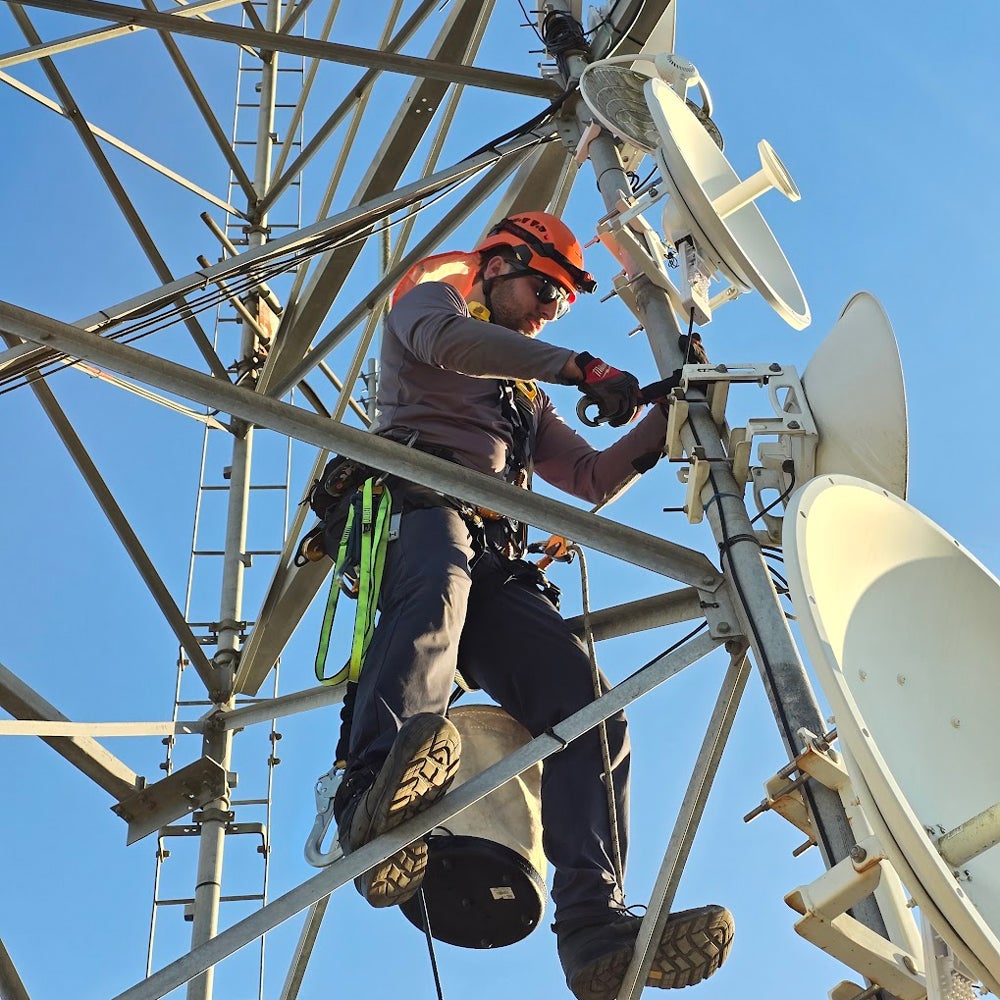
At Williams Hill, crews used computer-aided design to plan a six-panel solar array before installing it on an equipment vault. At Ranchita Canyon, volunteers erected a new antenna tower and installed solar power equipment. Other installations involve work high on communications towers, where experienced climbers, including Cal Poly alumni Davide Lanfranconi and Marcel Stieber, have contributed specialized skills.
Gregory estimates that 20 to 30 students have participated in the project so far, helping plan and install equipment alongside amateur radio volunteers. The experience has also influenced his academic direction. Gregory credits the club with sparking his interest in radio frequency engineering, now the focus of his master’s research.
During a club meeting, members tested the expanded network by placing a voice call and monitoring the sites carrying the transmission. Sathish recalled the reaction when the call went through: “It actually works!”
Although the three-county connection is complete, some sites still need updated equipment or backup power systems. Additional radio links would allow data to travel along alternate routes if one fails.
The club expects those improvements to take at least another year and is collaborating with other amateur radio groups on plans to extend the network north toward the Bay Area and south toward Los Angeles.
Want more Learn by Doing stories in your life? Sign up for our monthly newsletter, the Cal Poly News Recap!


